
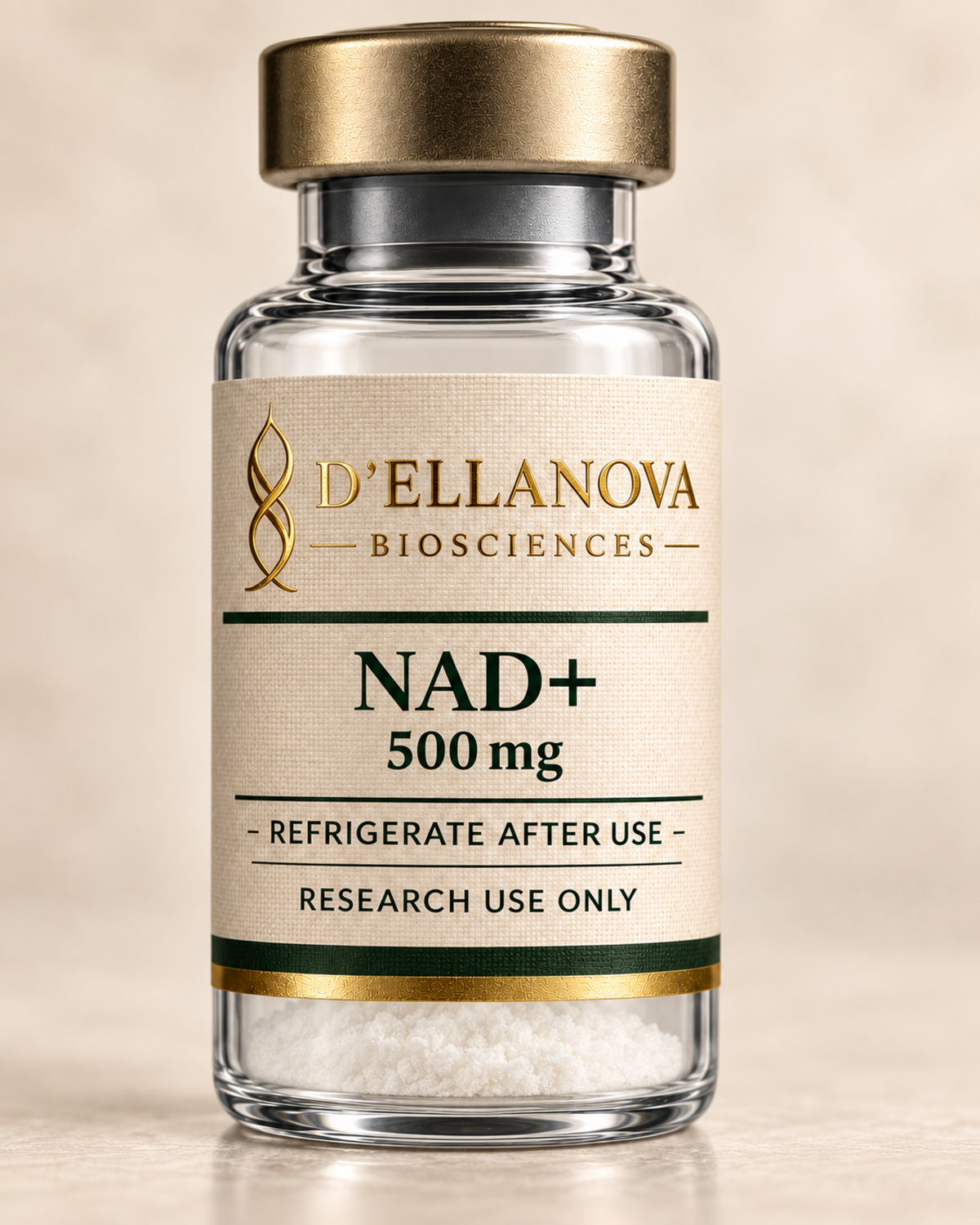

RESEARCH
DISCOVERY
INNOVATION

Research-grade compounds · RUO Only

Advanced Peptide
Research Compounds

Dellanova Research supplies premium research-use-only peptide compounds to laboratories and independent researchers. Every batch is third-party HPLC verified — Certificate of Analysis included.

Premium
Quality

Research
Driven

Science
Focused

Trusted
Sourcing

Research
Support

99%+ Purity Guaranteed

Third-party tested with full documentation

Research Use Only

Products supplied exclusively for laboratory research

Complete COA Reports

Downloadable batch-specific certificates for full transparency.

Secure & Compliant Shipping

Priority delivery in 2–3 days

Product catalog

Our Wellness Collection

Dellanova Biosciences
THE DELLANOVA STORY

Research, Presented With Purpose

Dellanova Biosciences is positioned around the study and presentation of peptide science, with an emphasis on clear product information, research context, and a refined standard of presentation.

Peptides are short chains of amino acids that can participate in highly specific biological signaling. Modern peptide research spans molecular design, receptor biology, analytical characterization, stability, and drug development.

Research-led presentation

Dellanova focuses on clear, responsible research communication.

Clear compound information

Each compound is presented with relevant information to help researchers understand its identity.

Quality-conscious standards

Dellanova emphasizes consistency, transparency, and attention to detail across its research materials and product presentation.

Education before claims

Dellanova prioritizes scientific education and research context, providing informative content without making unsupported claims.

RESEARCH APPLICATIONS

Explore Products →

FORMULATION RESEARCH

Explore Products →

ANALYTICAL EXPLORATION

Explore Products →

LABORATORY SOLUTIONS

Explore Products →

THE DELLANOVA STANDARD

Why Dellanova

A premium research experience built around transparency, organization, and respect for what the evidence can—and cannot—tell us.

01

Documented Information

Present compound names, formats, and research context clearly rather than relying on vague wellness language.

02

Research-First Language

Separate established scientific findings from early-stage, preclinical, or uncertain evidence.

03

Refined Standards

Bring consistency to presentation, documentation, labeling, and the overall research experience.

04

Responsible Positioning

Research-use products are presented as research materials, not as substitutes for approved medicines or professional care.

05

Science-Informed

Peptide science draws on molecular biology, receptor signaling, medicinal chemistry, analytics, and drug-development research.

06

Elegant By Design

A royal visual identity gives the brand a distinctive presence without compromising scientific clarity.

OUR PRODUCTS

RESEARCH PEPTIDES

A curated selection of premium peptides
designed for research, discovery,
and laboratory applications.

WHY PEPTIDES MATTER IN RESEARCH

The Research Potential of Peptide Science

Peptides occupy an important space between small molecules and larger biologics. Their sequence and structure can be studied to understand biological signaling, receptor interactions, pharmacology, and therapeutic design.

Research context should always be read alongside the specific compound, evidence base, and study design.

Targeted Biological Signaling

Many peptides interact with specific receptors or signaling pathways, making peptide–receptor biology an important research area.

High Molecular Specificity

Sequence and structure influence how peptides interact with biological targets, supporting detailed structure–activity research.

Design & Optimization

Researchers can investigate sequence changes, chemical modification, stability, half-life, and delivery to improve candidate properties.
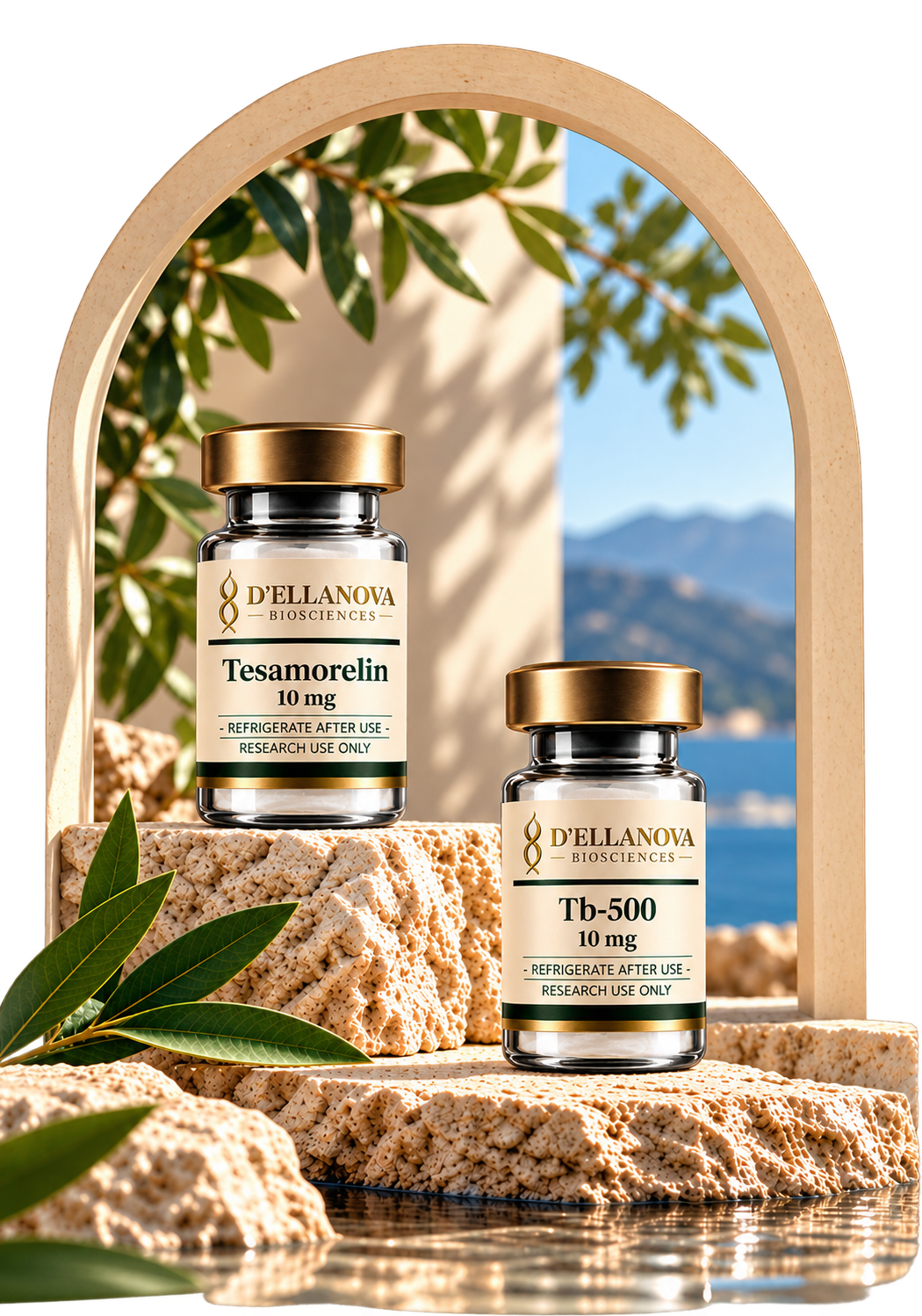
Dellanova Biosciences

Analytical Science

Peptide research depends on characterization, purity assessment, identity testing, stability studies, and other analytical approaches.

Translational Research

Peptide candidates can move through stages from molecular and cellular research toward preclinical and, for selected compounds, clinical development.

Broad Research Landscape

Peptide science spans metabolism, endocrinology, neuroscience, immunology, oncology, regenerative biology, and other research fields.

Research context is not a claim of clinical effectiveness. Evidence varies substantially by peptide, indication, route, formulation, and stage of development.

Peptides are short chains of amino acids. In biology, peptides can function as signaling molecules and can interact with receptors and other biological targets. Peptide research therefore covers sequence, structure, signaling, pharmacology, stability, and delivery.

No. Some peptides are approved medicines, while many others are experimental compounds, research tools, or candidates still being studied. Regulatory status and evidence must be considered compound by compound.

No. Findings from biochemical, cellular, animal, or early clinical research do not automatically establish safety or effectiveness in people. The strength of evidence depends on the compound and the study design.

Identity, purity, concentration, impurities, aggregation, stability, and other analytical characteristics can affect the interpretation and reproducibility of peptide research.

The catalog should be presented according to its research-use positioning. Research materials should not be represented as approved medicines or as substitutes for professional medical care.

Because responsible scientific communication should match the available evidence. Where human evidence is limited or absent, the page should avoid presenting research findings as established clinical outcomes.

Peer-reviewed literature, pharmacology references, regulatory sources, and primary research publications are appropriate places to evaluate peptide science. Evidence should be reviewed in context rather than relying on marketing summaries.

Questions about diagnosis, treatment, medication, dosing, or personal health should be discussed with a qualified healthcare professional.